This page like life in general is a work in progress, it could equally be argued that life is simple and inherantly perfected by the very nature of its being, following that logic work then is ours to reintegrate our being with the simplicity of a nature that we have strayed from. In any case this is where I hope to place thoughts relative to my studies in esoteric teachings and traditions. In the future I will in part be using this space to organize and express my thoughts on these subjects as well as share ideas and interests with others who may be similarly inclined to matters of spirit and the inner life.
Bear in mind that this page will grow as I learn more about how to write in HTML, as well as have time to place more content into it in the ways of links, essays, images etc. So far I have some material up on Martinism, and will be adding material on Qabalah and Alchemy. Over time and as my understanding of the subject grows I hope to have a section on the Yoga Sutras of Patanjali as well. The aphorisms in Patanjali's Yoga Sutras to me express some of the best descriptions and instructions on meditation and the methods to work with the various modes of cognition.
While the subject of economics would seem out of place I recently ran across a short film and book written which defines the relationship between economics and religion, or the academic method of religious studies which largely seeks to understand through a particular society or cultures religious habits the underlying worldview operating to inform their actions. A worldview is much like a symbolic lever whereby one is situated in relationship to the rest of the universe based on the given, or understood laws of reality. When one knows where they stand in relation to life they have a knowledge whereby they may affectively bring about desired change and harmonize themselves with the larger order of the universe. Eisenstein explains how ancient cultures delineate these messages about the nature of reality through mythology, storytelling or rites of passage that explain the member of a given societies role and responsabities that must be fulfilled to maintain a healthy relationship with the given order of life. Much of ancient tradition, while being rediscovered has eroded over the past few hundred years for a number of reasons and the new popular myth is that of economy which is controlled and expressed by the economic elite. We are rapidly awakening to the understanding that the story they tell us about life and issues of highest concern are faulty, and the system that our present economy perpetuates is inherantly flawed, both to the people who from the base level support it save for the few who sit atop it's hierarchy, although even those priveledged to sit atop this hierarchy are captive to an alienating and empty worldview themselves. Sacred Economics is a short film and also a book written and narrated by Charles Eisenstein describing the relationship between our current economic system and how it reveals the worldview prevalent among modern society explaining the resultant sense of, or better lack of connectivity to the universe. Illustrating how the prevalent economic system sets the individual apart from nature and a sense of community by commoditizing much if not all of what we come into contact with resulting in a sense of alienation, we become beings set apart from nature, and the genuine sense of community is eroded giving way to the selfish pursuits of a lonely individuaism. The film draws from material in his book by the same title, and describes contributing factors resulting in the economics of scarcity themselves the product of a debt based economy where all the money lent and produced by the Federal Reserve has interest associated with it, the end result being that there is inevitably more debt on this planet than there is money leading to the dog eat dog ideology of global finance. He finally presents an appealing solution to our failing economic system offering the alternative of a healthier model of transacting exchanges through gift economies, as well as peer to peer and open source based initiatives. Arguing in part that life is a gift, which when understood gives one a sense of gratitude and the desire to be a gift giver oneself, and sew the seeds of gratitude and true loving community on this planet. Instead of hoarding resources this paradigm shift entails sharing, where investments are in the good will mutual support and gratitude that would be the result of this new system. E basic example is given in the person who has too much food to consume in the time given before it goes bad, it becomes evident that it is in their best interest to share the excess with people who have less, the result being that the community whom has benefited from his generosity will in turn help him when he lacks a resource. It seems like a tall order but I am game for some transformation this planet is in need of some serious healing and if we simply resign ourselves to passive acceptance of a broken system, then that is the gift we give to future generations. I read a quote recently stating that what we lose by not taking risks costs us more in the end.If you liked the video posted at the beginning of this paragraph here is another link to part 1 of a more in depth lecture where Eisenstein explores those topics in greater detail.
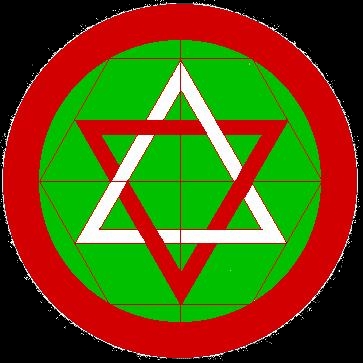
Martinism is a form of esoteric Christianity that includes (but is not limited to) elements of the Hermetic Qabalah in the transmission and articulation of its teachings. The teachings themselves are syncretic and express various esoteric and initiatic currents within the Order's framework. It's founder Louis Claude de St. Martin was an initiate of the Elus Cohen an esoteric order within the degree structure of Freemasonry practicing elaborate theurgical workings, a practice which he eventually waned from in favor of a more contemplative and devotional path of spiritual unfoldment. It must be said that he did not reject the beliefs which informed the Elus Cohen doctrine, simply the method of approaching the works the teachings entailed. LC de St. Martin's method is termed the "Path of the Heart" and interestingly one of the primary symbols of Martinism, largely consisting of a hexagram, bears a strong resemblance to the Anahata, Heart Chakra.

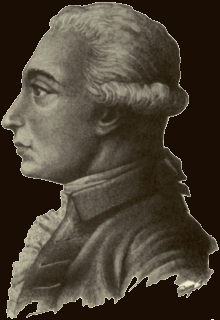
"The only initiation which I preach and seek with all the ardour of my soul is that by which we may enter into the heart of God and make God's heart enter into us, there to form an indissoluble marriage, which will make us the friend, brother, and spouse of our Divine Redeemer. There is no other mystery to arrive at this holy initiation than to go down into the depths of our being, and not let go till we can bring forth the living vivifying root, because then all the fruit will be produced within us and without us naturally."
-Louis Claude de St. Martin
Click on one of the Sephiroth in the Tree of Life to read about it:
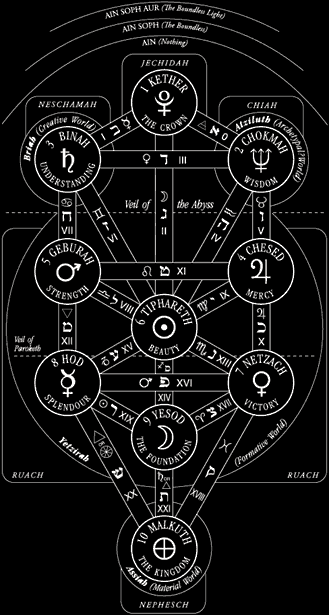
Qabalah translates "to receive" which explains the method whereby it was transmitted from initiate to disciple well over a thousand years ago before much of it was committed to writing. Classically it is a Judaic form of mysticism, although as time developed the Qabalah found its way into the studies of the Christian mystics, and eventually those who would be termed the Hermeticists. Interestingly many themes from Platonic philosophy and Pythagoreanism as well as the Gnostic cosmology also find their way into the traditional Qabalah. Much of the Hermetic and modern occult concepts of the Qabalah come from the Sepher Yetzirah which is a primary text to the Hebraic tradition as well. A prominent figure in most all studies of Qabalah, be it Judaic, Christian, Hermetic or otherwise is the symbol of the Tree of Life depicted above. The Tree represents the 10 Sephiroth as circles of emanation from whence the Source of all existence created the universe in successive stages of emanation from the Unmanifest. While the Tree of Life is understood as a pattern describing the process of the universes unfoldment from preeternity, it's various constituent elements, and the the passage back to Source, it also represents the constitution of the human being, it also representing the various energy centers which compose the human being much like the Hindu and Buddhist Charkras.
©